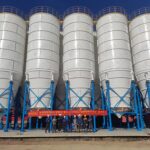
15 Things Every Flour Factory Should Check
Flour Silo Inspection Checklist

When was the last time your flour silo was properly inspected from the inside?
A flour silo can continue operating for years while gradually accumulating flour residue, hardened deposits and other storage-related problems.
Because much of the silo is hidden from view, problems may only become obvious when flour starts flowing poorly, lumps appear in production, or the silo becomes blocked.
Use this checklist as a starting point for your next flour silo inspection.
1. When Was the Silo Last Professionally Cleaned?
Check your records.
If the silo has:
-
- Never been professionally cleaned
- Not been cleaned for several years
- An unknown cleaning history
it should be considered for a detailed inspection.
Ask:
“Can we verify the last internal cleaning date?”
2. Is There Hardened Flour on the Silo Wall?
Look for accumulated or hardened flour deposits on internal surfaces.
Small amounts of residue can gradually build up over repeated filling and discharge cycles.
Pay particular attention to areas where flour may not flow freely.
3. Is There Flour Buildup Around the Cone?
The cone area deserves particular attention.
Flour can accumulate around the lower section of the silo and discharge area, potentially affecting material flow.
Check for:
-
- Hardened flour
- Caking
- Residue layers
- Restricted discharge
- Material accumulation
4. Is Flour Flow Consistent?
Ask your operators:
“Does the flour always flow smoothly?”
Watch for:
-
- Slow discharge
- Intermittent flow
- Bridging
- Rat-holing
- Manual intervention
- Repeated blockage
These may indicate that the silo needs further investigation.
5. Are You Finding Flour Lumps?
Unexpected lumps should be investigated.
Possible contributing factors include:
-
- Moisture
- Caking
- Old flour residue
- Storage conditions
- Material buildup
Record when and where the lumps were discovered.
6. Is There Evidence of Moisture?
Moisture is one of the key conditions to watch for in flour storage.
Inspect for:
-
- Condensation
- Damp areas
- Wet or hardened flour
- Corrosion
- Water ingress
- Abnormal caking
Pay particular attention after periods of high humidity or temperature changes.
7. Is There an Unusual Smell?
Does the silo smell different from normal?
An unusual odour should not simply be ignored.
Investigate possible sources such as accumulated residue, moisture-related problems or other storage conditions.
8. Are There Signs of Pest Activity?
Check the silo and surrounding area for evidence of pest activity.
Look for:
-
- Insects
- Droppings
- Webbing
- Damaged seals
- Openings or entry points
- Accumulated flour around equipment
Any pest-related finding should be handled according to the factory’s food-safety programme.
9. Are the Filters and Vents in Good Condition?
Check silo filters, vents and associated components.
Look for:
-
- Excessive flour dust
- Blockage
- Damaged filter media
- Poor sealing
- Abnormal pressure behaviour
Poor filtration can affect both silo operation and the surrounding working environment.
10. Are the Discharge and Pneumatic Lines Clear?
Flour flow problems may not always originate inside the silo itself.
Check the associated:
-
- Pneumatic conveying lines
- Valves
- Discharge outlets
- Flexible connections
- Hoppers
- Conveying equipment
The objective is to identify the actual source of the problem rather than assume that cleaning alone will solve it.
11. Is There Old Flour Remaining Inside?
Ask:
“How much flour normally remains inside after the silo has been emptied?”
Persistent residual flour can become part of the next production cycle.
This is particularly important when different flour types or batches are stored in the same system.
12. Is There a Risk of Cross-Contamination?
Consider whether the silo is used for:
-
- Different flour grades
- Different suppliers
- Different batches
- Allergen-related materials
- Other powdered ingredients
Your cleaning and inspection programme should take the factory’s food-safety and product-changeover procedures into account.
13. Is the Silo Included in Your HACCP / Food Safety Programme?
Your silo should not be treated as “just storage equipment.”
It forms part of the overall material-handling and food-production system.
Check whether silo inspection and cleaning activities are properly documented within your:
-
- HACCP programme
- ISO 22000 system
- BRCGS programme, where applicable
- Internal food-safety procedures
- Preventive-maintenance programme
14. Do You Have a Cleaning Record?
A good maintenance system should be able to answer:
-
- When was the silo inspected?
- What was found?
- Was cleaning required?
- What cleaning method was used?
- What areas were cleaned?
- Were photographs taken?
- Who performed and verified the work?
Good documentation makes it easier for maintenance and QA teams to demonstrate that silo hygiene is being actively managed.
15. What Does the Silo Actually Look Like Inside?
This may be the most important question.
You cannot determine the internal condition of a silo simply by looking at its exterior.
If the silo has never been inspected internally — or if its condition is unknown — consider arranging a professional inspection.
A proper assessment can help determine whether the silo requires:
No immediate action → Monitoring → Planned cleaning → Urgent cleaning
Quick Silo Health Check
Score your silo using the questions below.
| Question | Yes | No |
|---|---|---|
| Has the silo been professionally cleaned before? | ☐ | ☐ |
| Is the cleaning date documented? | ☐ | ☐ |
| Is flour flow consistently smooth? | ☐ | ☐ |
| Have you never experienced bridging or blockage? | ☐ | ☐ |
| Have you never found unexpected flour lumps? | ☐ | ☐ |
| Is there no evidence of moisture? | ☐ | ☐ |
| Is there no unusual odour? | ☐ | ☐ |
| Are there no signs of pest activity? | ☐ | ☐ |
| Are filters and vents operating properly? | ☐ | ☐ |
| Are discharge lines clear? | ☐ | ☐ |
| Is residual flour controlled? | ☐ | ☐ |
| Is cross-contamination risk controlled? | ☐ | ☐ |
| Is silo hygiene included in your food-safety programme? | ☐ | ☐ |
| Are inspection and cleaning records available? | ☐ | ☐ |
| Has the internal condition of the silo been verified? | ☐ | ☐ |
If You Answered “No” to Several Questions…
Don’t immediately assume that the silo needs cleaning.
Instead, inspect and assess the condition first.
The objective is to identify the actual problem and determine the appropriate action.
When Should You Consider Professional Silo Cleaning?
Consider arranging an inspection when:
🟠 Your silo has never been cleaned
Especially if it has been operating for many years.
🟠 Flour flow has deteriorated
Repeated flow problems may indicate internal buildup or another mechanical/storage issue.
🟠 You find hardened or caked flour
Particularly around the cone or discharge area.
🟠 You experience repeated blockages
Repeated production interruptions should trigger an investigation.
🟠 You have an upcoming audit
Use the opportunity to review your silo hygiene and documentation before the audit.
🔴 You suspect contamination or serious moisture problems
This should be investigated promptly through your appropriate QA and food-safety procedures.
Don’t Wait Until the Silo Blocks
Silo cleaning should ideally be part of a planned preventive-maintenance and food-hygiene programme, rather than something done only after a production problem occurs.
A simple cycle can be:
INSPECT → ASSESS → CLEAN → DOCUMENT → MONITOR
This gives your maintenance and QA teams greater visibility over one of the most important storage points in your flour-handling system.
Need Help Assessing Your Flour Silo?
We provide flour silo inspection and cleaning services for food-processing facilities.
If you are unsure whether your silo actually needs cleaning, start with an inspection.
We can help assess the condition and identify areas requiring attention before you commit to a cleaning programme.
Request a Flour Silo Hygiene Inspection
Send us:
- Number of silos
- Approximate silo capacity
- Type of flour stored
- Last known cleaning date
- Any current flow or caking problems
We will help you determine the appropriate next step.
Don’t wait for a flour blockage to tell you that your silo needs attention.
Inspect it before it becomes a production problem.