Complete Alternative Fuels and RDF Handling Systems
Conveying Quality, Reliable, Safe and Flexible Handling of Alternative Fuels
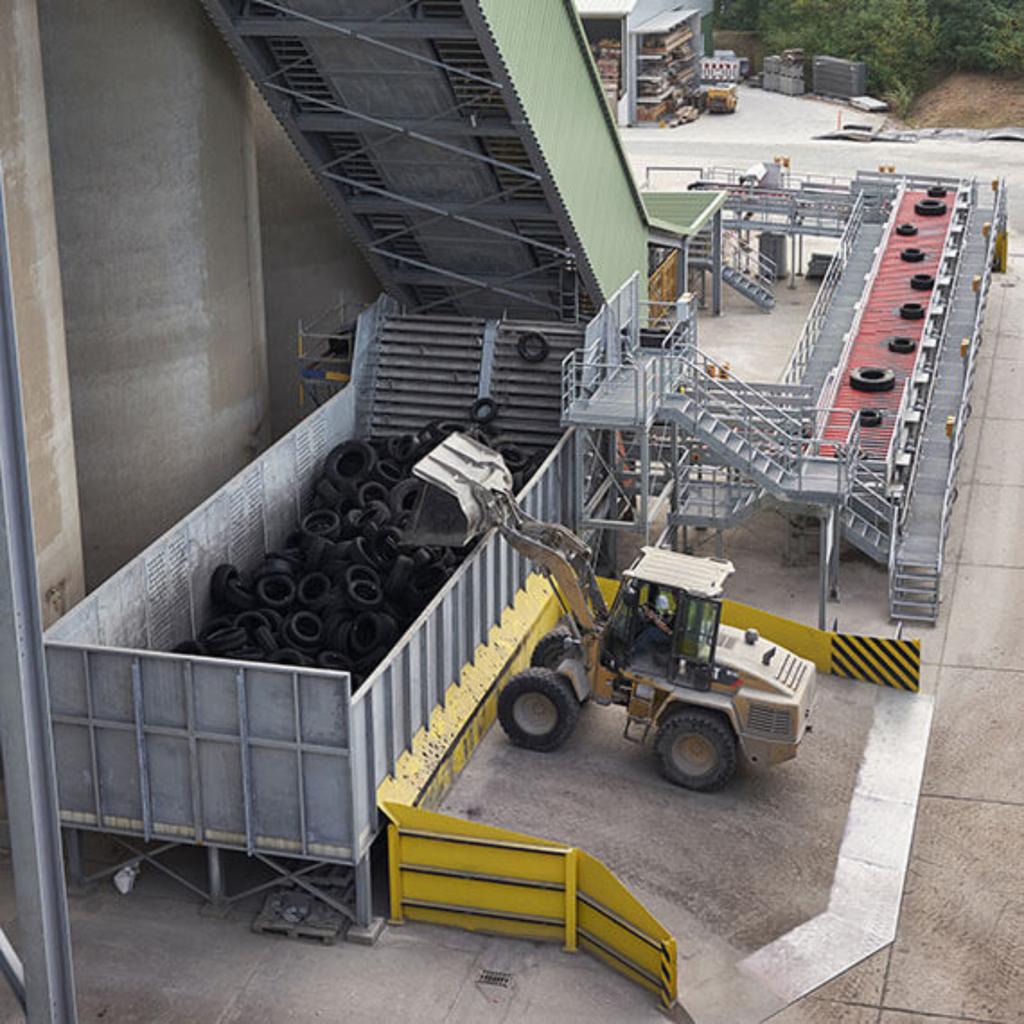
As industries move towards alternative fuels to reduce dependence on conventional fossil fuels, the reliable handling of materials such as Refuse-Derived Fuel (RDF), Solid Recovered Fuel (SRF), chipped tyres, biomass and other alternative fuels becomes increasingly important.
Engineered material handling solutions were designed to transport alternative fuels safely, efficiently and consistently—from the receiving point through to the injection point.
An integrated system needs to be designed around the actual requirements of each plant, providing a flexible and modular solution that can adapt to different fuel qualities, plant layouts, and future operating requirements.
Reliable handling for variable alternative fuels
Alternative fuels are not always consistent.
Particle size, density, moisture content, composition and calorific value can vary significantly. These characteristics create challenges for conventional conveying and feeding systems.
A properly engineered AFR handling system helps maintain a stable and controlled material flow, while reducing operational risks, unnecessary wear and maintenance requirements.
The solution should be designed to handle different fuel qualities while providing:
- Reliable material conveying
- Enclosed and controlled transport
- Reduced material spillage and dust
- Lower friction and energy consumption
- Safer sampling and inspection
- Flexible plant integration
- Modular expansion and future adaptation
Complete RDF and alternative fuel handling
A combination of conveying, feeding and sampling technologies are necessary to create a complete material handling route from fuel reception to the final injection point.
1. Multi-purpose infeed system: Flexible feeding for different fuel qualities
Multi-purpose infeed system is designed for loading by front wheel loader and can accommodate a range of alternative fuel materials.
The system can be configured for chipped tyres, RDF and other alternative fuel qualities, providing a flexible solution when fuel characteristics or supply sources change.
Key benefits:
- Suitable for multiple alternative fuel types
- Front wheel loader feeding
- Flexible material reception
- Designed for varying fuel characteristics
- Robust construction for demanding industrial applications
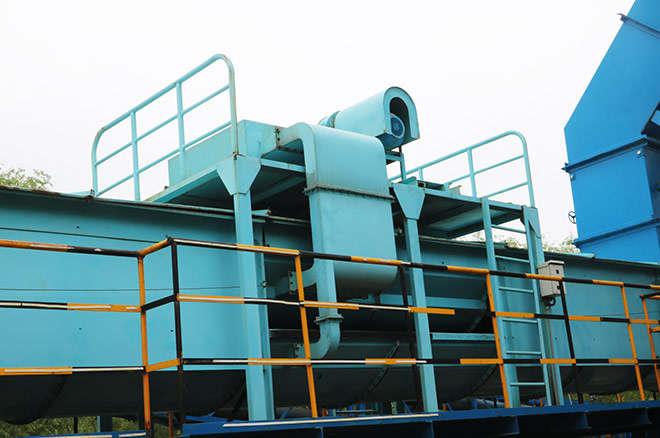
2. Air-supported belt conveyor: Low friction, low wear, lower power consumption
Air-supported belt conveyor uses an air cushion to support the conveyor belt, significantly reducing friction compared with conventional idler-supported conveying systems.
This principle can reduce mechanical components, maintenance requirements and energy consumption while providing reliable transportation of alternative fuels.
Designed for efficient conveying:
- Low friction operation
- Reduced belt wear
- Lower power consumption
- Fewer moving components
- Reduced maintenance requirements
- Low dust and material spillage
- Enclosed conveying options
- Reliable continuous operation
3. Enclosed RDF belt conveyor: Safe, enclosed transport to the injection point
RDF needs to be transported reliably from the receiving and preparation area to the final injection point.
Enclosed belt conveying system provides a controlled transportation route that helps protect the material from external conditions while reducing dust, spillage and environmental exposure.
The system can be engineered according to the required conveying distance, capacity, plant layout, and fuel characteristics.
Benefits:
- Enclosed material transportation
- Controlled RDF flow
- Reduced dust and spillage
- Protection from external conditions
- Suitable for long-distance conveying
- Flexible routing according to plant layout
- Designed for integration with existing plant systems
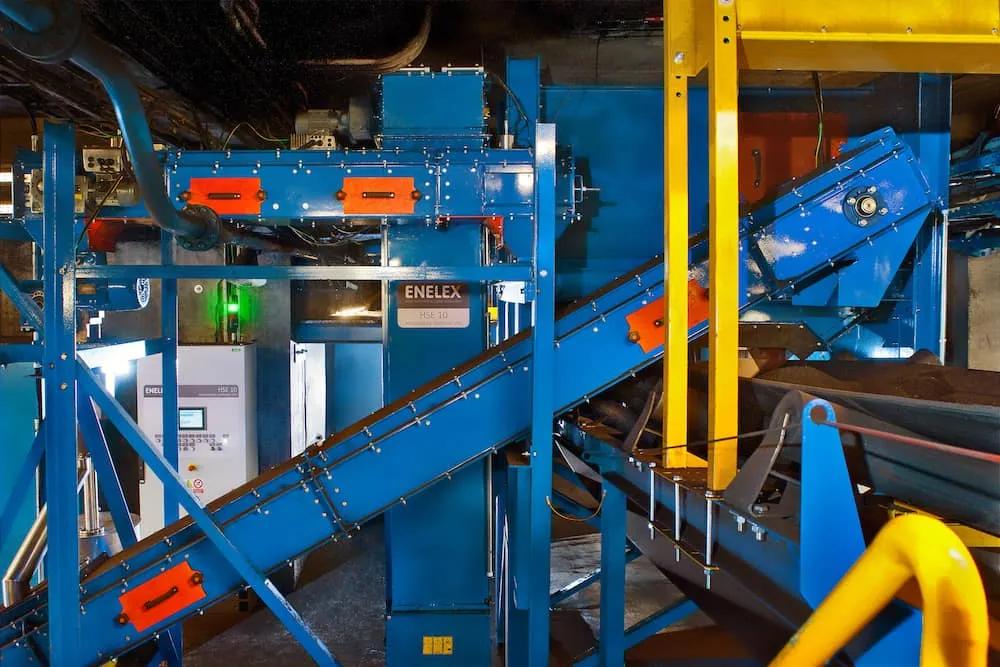
4. Automatic RDF sampling station: Safer sampling, better fuel quality control
Consistent fuel quality is essential for reliable alternative fuel utilisation.
Automatic sampling station is designed to obtain representative RDF samples without requiring operators to manually access the material flow.
This allows plant personnel to monitor fuel quality while reducing unnecessary exposure to moving material and potentially hazardous operating areas.
Safer and more efficient sampling:
- Automatic sampling
- Reduced operator exposure
- Improved sampling consistency
- Safer fuel quality monitoring
- Integration with the RDF handling system
- Suitable for continuous industrial operation
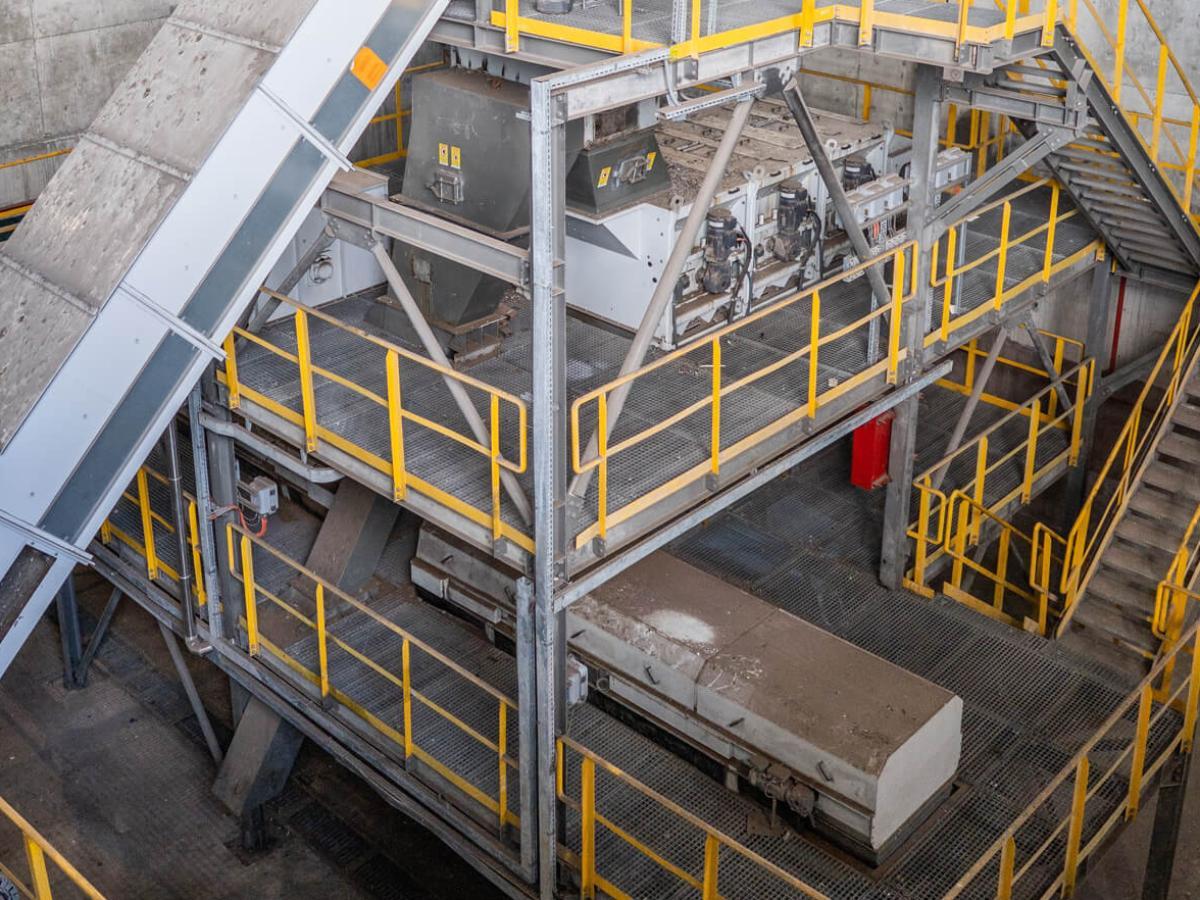
5. Flexible & modular system design
Every plant is different.
Plant layout, fuel characteristics, conveying distances, required capacity, injection technology and future expansion requirements can vary significantly.
That’s why our AFR handling systems are designed with flexibility and modularity in mind.
The system can be configured and adjusted according to each project stage, allowing the solution to evolve as your plant requirements change.
One system, multiple possibilities:
- Modular system configuration
- Flexible plant integration
- Adaptable to different fuel qualities
- Suitable for new plants and upgrades
- Designed around existing plant conditions
- Allows future expansion
- Scalable according to project requirements
From reception to injection: A complete alternative fuel handling flow
Range of alternative fuels and materials
- Refuse-Derived Fuel (RDF)
- Solid Recovered Fuel (SRF)
- Chipped Tyres
- Used Tyres
- Biomass
- Industrial Waste
- Mixed Alternative Fuels
- Other Suitable Bulk Fuels
Industries where fuel consumption is significant and reliable material feeding is critical
- Cement Plants
- Lime Plants
- Waste-to-Energy
- Industrial Energy Facilities
What should plants consider?
When evaluating alternative fuel handling technologies, several factors should be considered:
- Fuel Characteristics – What type of fuel is being handled? RDF, SRF, chipped tyres, biomass or a mixture?
- Capacity – What is the required hourly fuel throughput?
- Material Properties – What are the particle size, moisture content, bulk density and flowability?
- Conveying Distance – How far does the fuel need to travel from reception to injection?
- Plant Layout – Are there elevation changes, existing structures or space limitations?
- Safety – How can operator exposure, dust and material spillage be minimised?
- Energy Consumption – How much power is required to continuously transport the fuel?
- Maintenance – How much mechanical equipment is involved, and what are the expected wear points?