ETG Case Study #17: From Murky to Clear Hotel Waste Water Effluent Tank
20 Days, One Visible Transformation
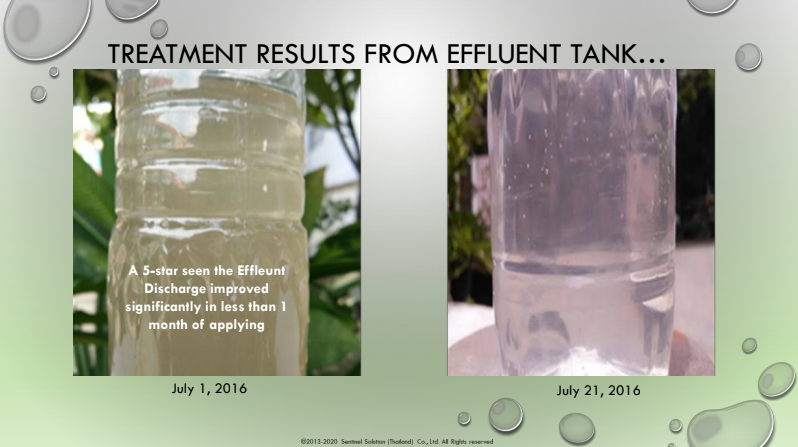
On the first day of July, a plastic bottle sat on a small table in a garden of a 5-star hotel. The water inside looked tired—cloudy, pale brown, and full of tiny suspended particles. Anyone glancing at it would have doubted it could ever become clean again.
The bottle held water drawn from the effluent tank, the final resting place of wastewater after a long journey through pipes and drains. For years, people had accepted that this was simply how the water looked. “Good enough,” some would say. Others avoided looking too closely.
Then a new treatment process was introduced.
At first, nothing dramatic happened. Day after day, the water passed through the system. The team monitoring it checked samples, recorded measurements, and waited. Improvements came quietly. The odor softened. Sediment settled more quickly. The color began to lighten.
The water was changing, even when no one noticed.
Three weeks later, on July 21, another sample was collected. This time, when the bottle was held up to the light, people stopped talking.
The difference was unmistakable.
The murky liquid that once hid everything beneath its surface had become clear enough to reveal the bottom of the bottle. Sunlight passed through it. The cloudiness was largely gone. What had seemed like an impossible transformation had happened one day at a time.
The two bottles stood side by side—a before and after, separated by only twenty days. They told a simple lesson: meaningful change is often gradual. Whether cleaning water, restoring land, or improving a process, progress may not be obvious from one day to the next. But with persistence and the right treatment, even the cloudiest conditions can become remarkably clear.
And so the bottles became more than samples. They became evidence that improvement is possible, visible proof that small daily changes can add up to a transformation everyone can see.