Optimizing the Waste Incineration Process in the Malaysian Waste-to-Energy Plants
Waste incineration process thermal monitoring: Optimizing combustion efficiency
The waste incineration process is a key component of waste-to-energy plants, where municipal and industrial waste is converted into valuable energy such as heat (steam) and power. However, to maximize the efficiency of this process, waste incineration plants must continuously refine their operations. A critical area for improvement lies in optimizing combustion, particularly within the high-temperature environment of the grate furnaces where the waste incineration process begins.
By accurately monitoring and optimizing the combustion phase, plant operators can increase steam production per ton of waste and enhance the quality of the slag, making it more valuable. Effective thermal monitoring of the combustion process plays a central role in achieving these improvements, ensuring optimal energy recovery and overall plant performance.
Flame front detection: A crucial feature for the waste incineration process
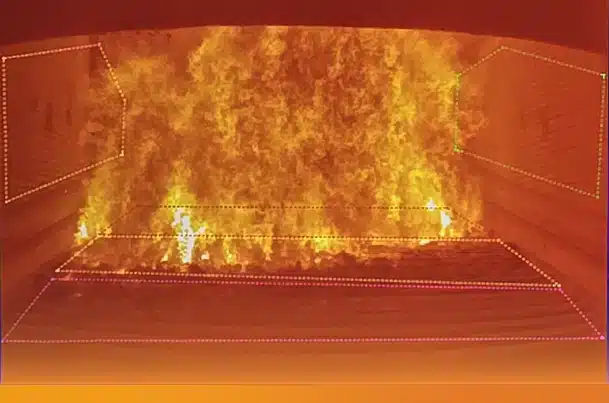
An important aspect of optimizing the waste incineration process is controlling the flame front—the exact point where combustion ceases. Accurately managing the flame front location enables better regulation of combustion, improving both efficiency and energy recovery.
HGH’s flame front detection function is designed specifically for the waste incineration process. Developed in partnership with global leaders in waste-to-energy, this real-time, precise flame front detection ensures that the combustion process can be dynamically adjusted for optimal performance.
The location of the flame front is transferred in real time to the furnace control system, allowing it to make necessary adjustments, such as:
- Grate speed: Adjusting the rate at which waste moves through the furnace.
- Air flow: Controlling airflow to optimize combustion.
- Burner activation: Activating additional burners to support combustion if needed.
These adjustments ensure that heat is released efficiently and that the combustion process operates within ideal parameters, minimizing energy waste and maximizing efficiency.
Contact us
Other solutions:
- Bulk Material Handling – belt/pneumatic conveying, packing, palletising, silo, bulk loading/unloading
- Environment – gas conditioning, scrubber, emission control
- Controller – infrared/thermal monitoring, mill/process control, online particle-size measurement
- Maintenance – refractory, wear protection, hardfacing, mill/roller component
email : amin [at] cemax [dot] com [dot] my
whatsapp : +60 12 273 3272